

Accessibility Lead for Global Private Bank

Overview
In 2025, the European Accessibility Act (EAA) came into force, obligating international digital platforms to meet accessibility requirements across all client-facing experiences. For the Global Private Bank, this introduced sudden material regulatory and financial risk across our global products.
Risk
In past enforcement actions, Bank of America settled for 15.5 million dollars in 2019 and Wells Fargo agreed to up to 16 million dollars in 2011 because regulators determined that governance and documentation of risk acceptance were insufficient. A single accessibility defect replicated across multiple client facing products could result in 15 million to 25 million dollars in remediation and legal exposure over time.
My analysis showed that
Accessibility ownership was fragmented across teams because it was a new requirement.
Product teams treated accessibility as a late-stage check and primarily a design responsibility.
Awareness alone did not change behavior, as the consequences were not yet clearly understood.
Our design systems had component level defects that were replicated across our products
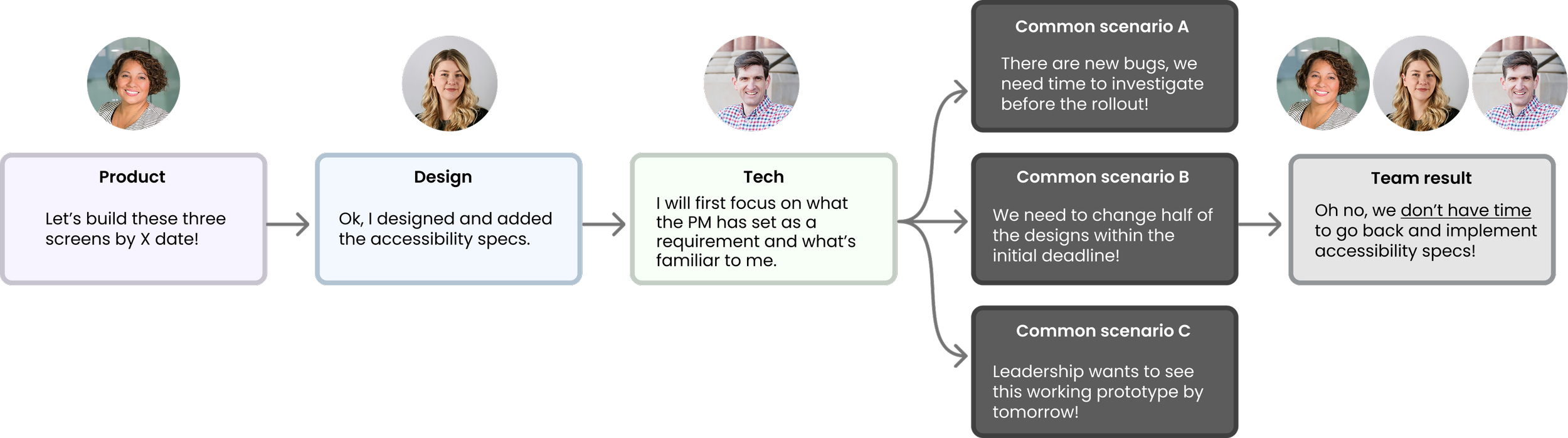
However, none of our digital teams had a set framework to build accessible experiences

“Accessibility is a triad responsibility!”

My role
Past settlements in the $15–16M range demonstrated that regulators expected not just accessible outcomes, but clear ownership, governance, and documented risk decisions. I identified these gaps across client-facing platforms and built an accessibility framework that became the baseline template used across all of our teams, supporting 95+ designers, 150+ engineers, and 10 product owners to reduce risk at scale.
Design System Integration
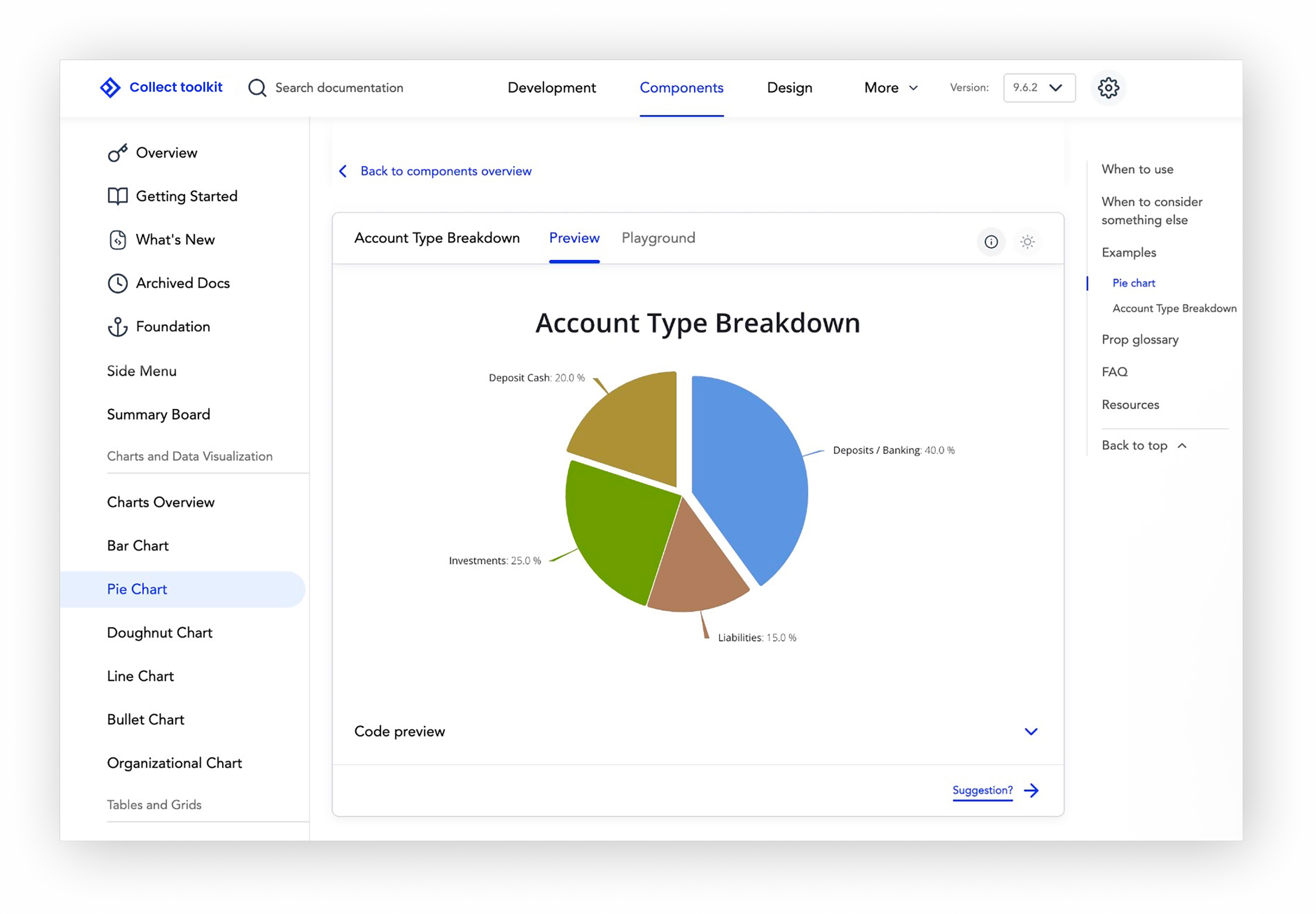
Delivered accessible focus states for all interactive components in the Global Private Bank’s biggest design system
Initiated and formalized accessibility spec integration across Figma and React libraries, reducing developer/design effort by ~50%, while increasing design consistency across federated teams.
Accessibility expert and advisor across three major design systems, coaching 10+ designers through accessibility remediation strategies.
2,000+ repositories protected by embedding accessibility into the design system
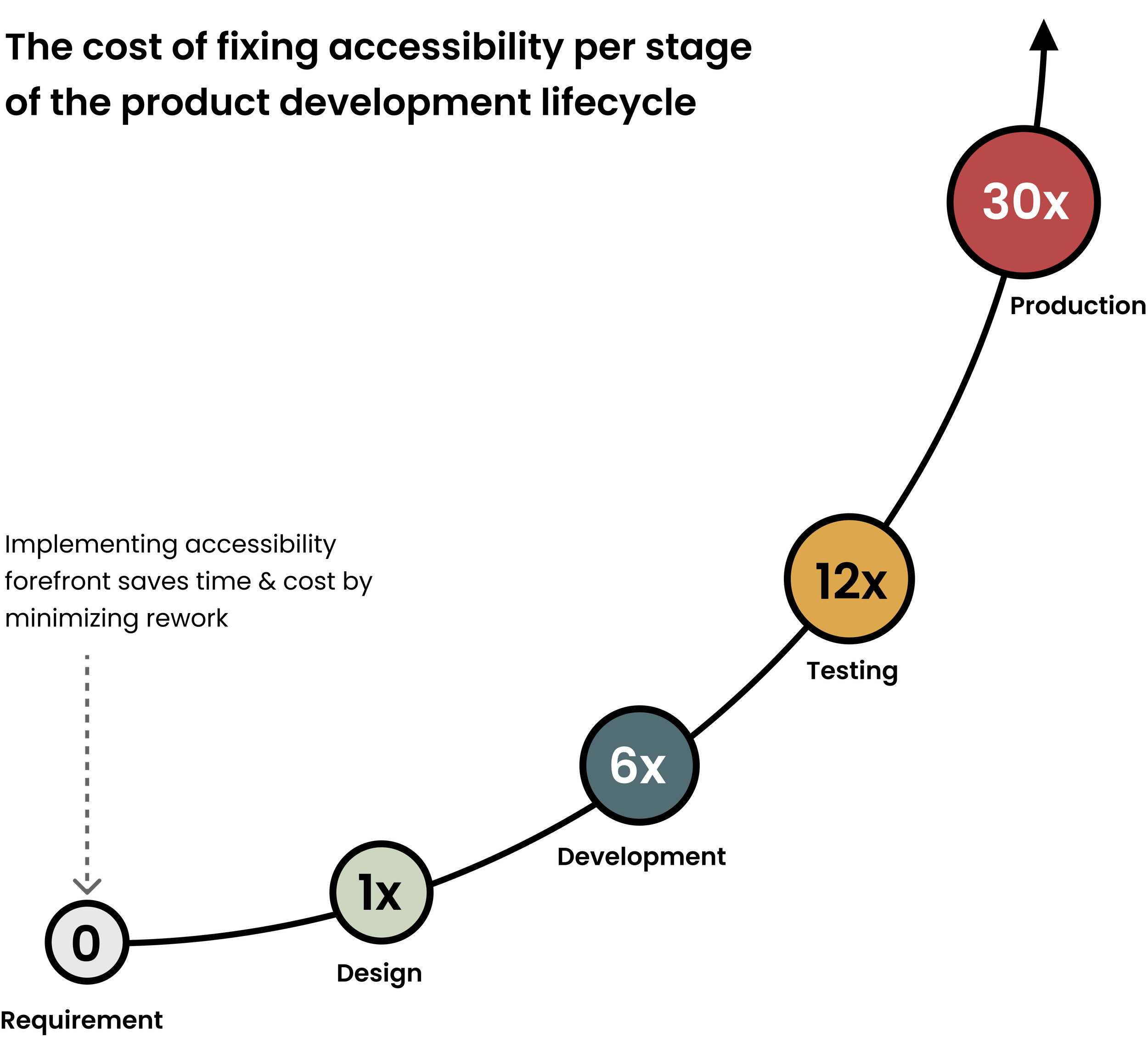
Pitch to management: the cost of accessibility, upfront vs. later fixes
Additional cost avoidance was achieved by preventing defects that are up to 30× more expensive to fix in production.
Accessibility costs start at 1× during design, then increase to 6× in development, 12× in testing, and up to 30× in production.
View data source and details here
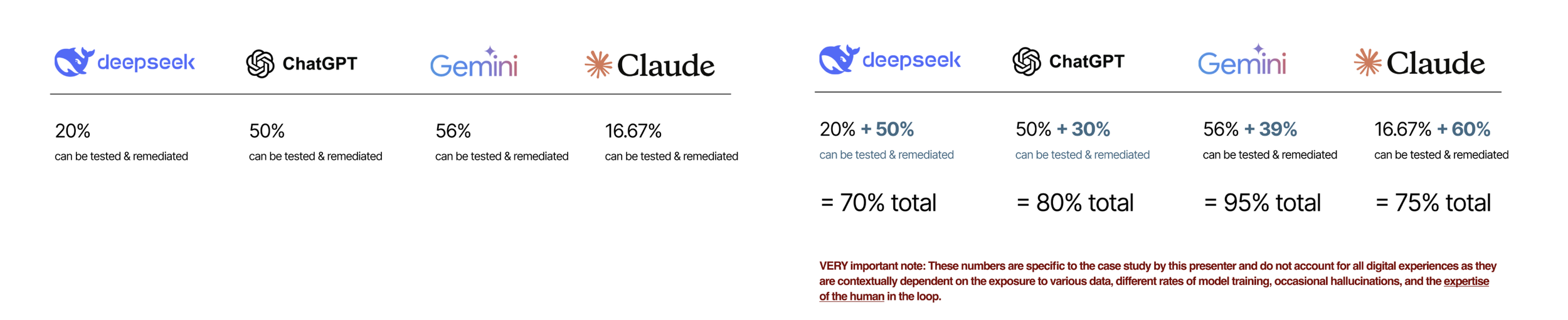
Assessing gaps in AI models, implementing full time testers to remediate those gaps
AI assessing WCAG accessibility without humans
Relying fully on AI and automation has limitations: it struggles to catch nuances in subjective context and often misses the balance between contextual judgment and technical complexity.
Versus with humans in the loop
So I secured approval and headcount for seven full-time accessibility testers to support product teams in closing those gaps.
Any remaining gaps pose potential risk, so in addition to automation, testers also conduct manual testing to achieve full coverage.
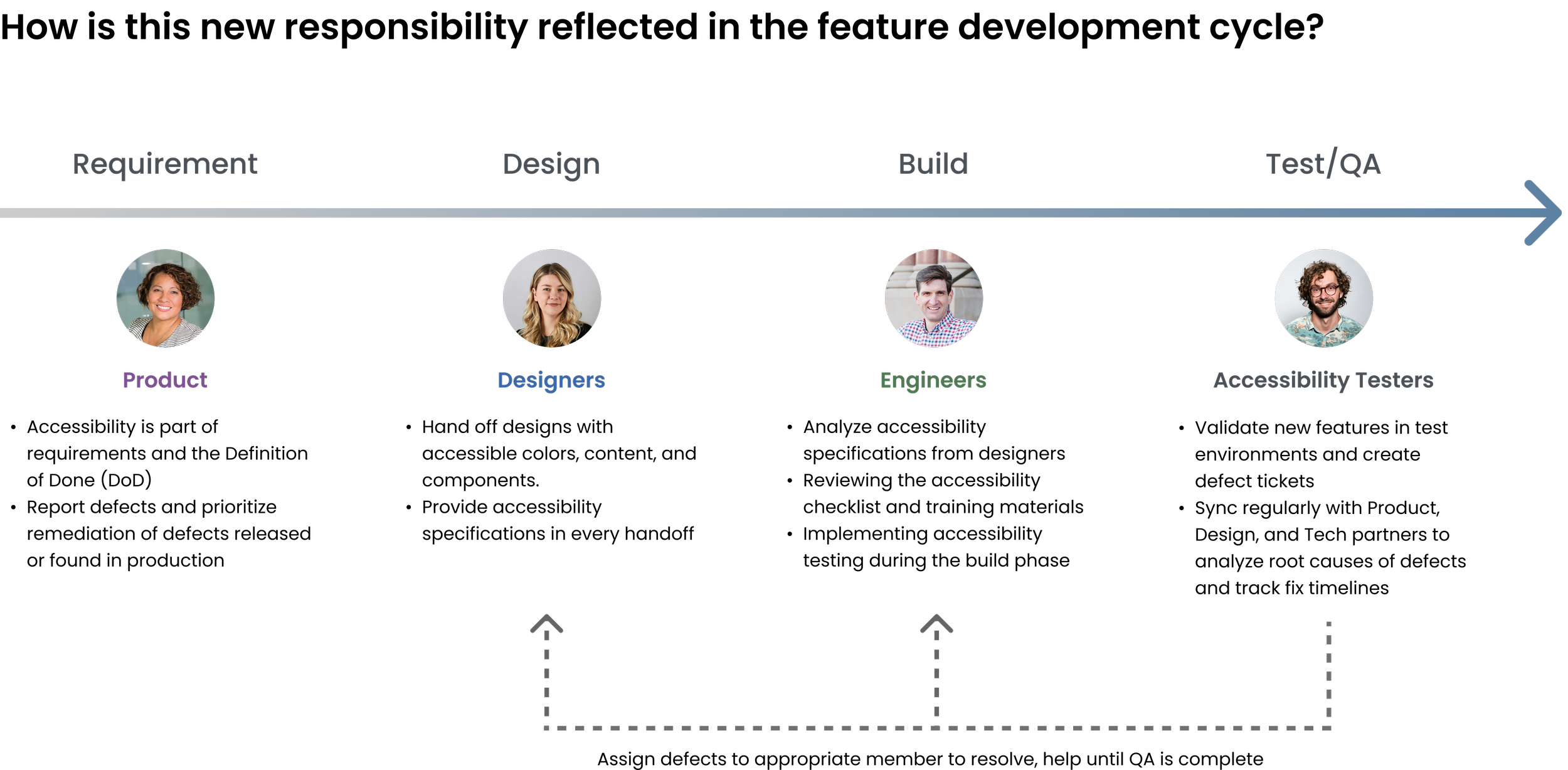
This shift turned accessibility from reactive remediation into proactive risk prevention.
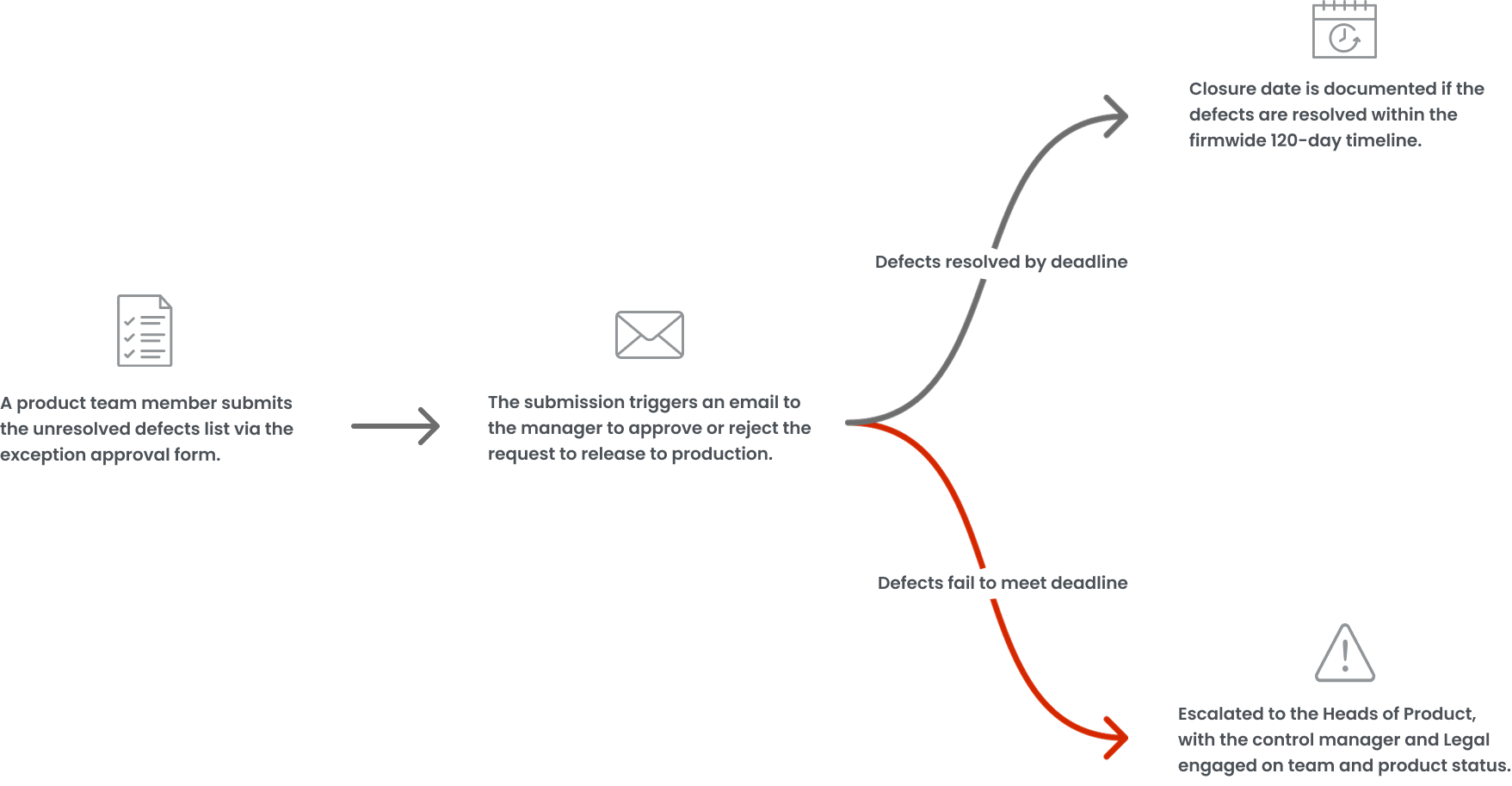
Implemented a control system to enforce defect resolution within a defined timeframe, preventing indefinite backlog
Introduced management escalation to create real consequences and drive behavior change
Established an audit trail in case regulators identify accessibility defects on our live websites

Outcome metrics
- $330,000 saved annually by replacing external consultants with me recruiting expert candidates as in-house testers
- 2,000+ repositories protected by embedding accessibility into the design system before development
- 80+ designers worldwide enabled to ship compliant work without slowing delivery
Influenced accessibility on mission-critical platforms:
-Main Portal (1M+ users): 30+ desktop features, 3 mobile features
-Embedded accessibility into the design and handoff process for the Workplace login experience, creating a replicable reference model for future flows.
-Effort resulted in ~50% reduction in rework and an estimated ~17,000 hours saved annually in triad/QA bandwidth.
Influence & collaboration




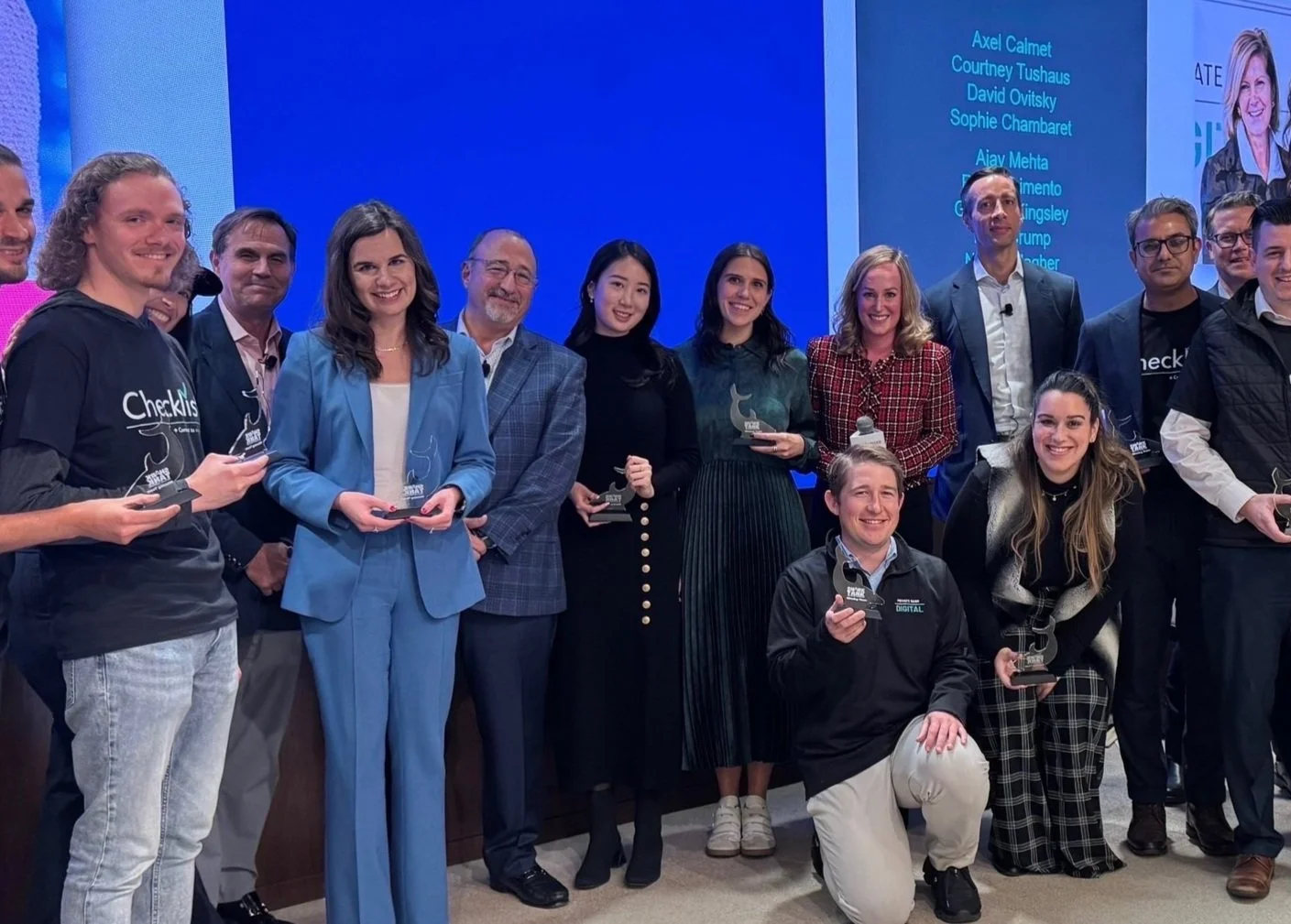
Organizational Leadership
Founded and led the Accessibility Advocates Team (consists of 20 designers) to address governance gaps across the design team into a centralized initiative.
Pitched program to leadership based on patterns observed across 50+ designers, resulting in executive support and cross-team participation.
Created and shared standardized design system-level practices to ensure long-term scalability of accessibility integration across multiple libraries.

Scaling Education & Culture Shift
Led 95 hours of Accessibility Office Hours (May 2024-), providing real-time coaching to over 12 design teams across web and mobile products.
Reduced ramp-up time for accessibility learners by creating tailored live exercises in Figma, allowing designers to learn how to apply accessibility specs in under 30 minutes.
Initiated the Accessibility Certification Track, mentoring and onboarding 13 designers/researchers into formal certification — saving an estimated 5–10 hours per designer in self-navigation and onboarding.
Strategic Risk & Compliance Leadership
Spearheaded accessibility readiness for a design system rollout across 5 global regions (Glasgow, Hong Kong, Singapore, India), covering 31,795 users, including 14,817 active users.
Flagged and escalated EU Regulation 301 549 compliance risks; created executive briefings and collaborated with legal to shape policy and timelines.
Presented plans to minimize risks to 5 Managing Directors, earning positive approval for implementation and monitoring.
What I changed
-Implemented full time Accessibility testers
-Centralized standards, governance, and workflows
-Partnered with Legal, Controls, Product, and Engineering to align incentives with AI and our design system
-After accessibility training and early defect fixes, defect density dropped from 2.8 defects per page (14 defects across 5 pages) to 1.2 defects per page (18 defects across 15 pages) in the next testing cycle, a ~57% reduction.
What’s next?
-Introduce real-time accessibility risk signals at the component level
-Standardize accessibility KPIs across product reviews and releases
-Operate confidently under uncertainty and regulation
-Continue executing a sustainable, scalable accessibility governance model for the Private Bank.